Annie Selke brings bedding and rugs together through a design minded approach to useful home textiles. This edit moves from duvet covers and coverlets to indoor and outdoor floor layers, then finishes at the bed with shams that make a room feel considered without becoming overly matched.
Annie Selke Bedding and Rugs: Pattern and Texture for Daily Life
Annie Selke’s Home Textiles Begin with a Point of View
Annie Selke’s story starts with textiles and a dining table. In a 2018 interview, Selke says she studied textiles at the University of Vermont, then began Pine Cone Hill Fine Linens from home with one employee in 1994. A decade later, she launched Dash & Albert rugs. The High Point Market company profile also dates Pine Cone Hill to 1994 and Dash & Albert to 2004, describing the company as based in the Berkshire Hills of Massachusetts. That history gives the Annie Selke name a specific shape: bedding and rugs grow from the same design minded home business, rather than unrelated categories collected under one label. Selke has spoken about wanting beautiful things to work in homes with children and pets, a practical point of view I appreciate because a bed or hallway is part of daily life, not a display.
That approach makes this edit feel like a conversation between the bed, the floor, and the small rituals that connect them. I would build from one expressive textile, then decide which other surface needs the same color or a quieter counterweight. The soft side of home textiles is a natural next thought when a room needs another layer. A useful first move is to choose how you want the room to feel when you wake up or come home, then keep a few surfaces calm so the pattern can breathe. I would skip treating every surface as a separate statement. The best rooms give the eye somewhere to rest.

Ines Linen Duvet Cover, Full/Queen
Annie Selke
$638

Moon Hills Linen Duvet Cover, Full/Queen
Annie Selke
$538

Macie Botanical Duvet Cover, King
Annie Selke
$338

Aria Floral Duvet Cover, King
Annie Selke
$338

Marshmallow Fleece Puff Coverlet, King
Annie Selke
$398

Fira Coverlet, Full/Queen
Annie Selke
$448

Wilton Bedspread, Queen
Annie Selke
$394

Bryant Quilt, Twin/Twin XL
Annie Selke
$428
Bedding and Coverlets for a Personal Bed
Bedding and coverlets are the first layers I think about when a bedroom needs a mood. Ines Linen Duvet Cover, Full/Queen is a strong place to begin when the top of the bed should lead the room. Moon Hills Linen Duvet Cover, Full/Queen offers another linen cover direction, while Macie Botanical Duvet Cover, King brings a botanical note in its name. Aria Floral Duvet Cover, King gives the room another floral route, and Marshmallow Fleece Puff Coverlet, King can sit as a distinctive layer when a softer finish is the aim. Fira Coverlet, Full/Queen and Wilton Bedspread, Queen are two more ways to think about the bed as a composition rather than a single matching set.
I like choosing the feeling first, then letting one patterned or textured piece carry the room while the other layers stay quiet. If the duvet is the focal point, a plain sheet and a calmer coverlet keep the eye from moving in too many directions. A bolder bed can still feel restful when the bedside table and the rest of the room are simple. I would keep the decorative pillows to a manageable number and give each layer a job, whether that is warmth, softness, or a little visual contrast. What I would skip is repeating every motif across the bed just because it belongs to the same collection. A bit of space between patterns makes the room feel lived in.

Gridiron Handwoven Indoor/Outdoor Rug
Dash & Albert by Annie Selke
$278

Samson Handwoven Indoor/Outdoor Rug
Dash & Albert by Annie Selke
$178

Arbor Machine Printed Washable Rug
Dash & Albert by Annie Selke
$44

Kali Machine Printed Washable Rug
Dash & Albert by Annie Selke
$138

Malta Handwoven Wool Rug
Dash & Albert by Annie Selke
$68

Miss Muffet Handwoven Cotton Rug
Dash & Albert by Annie Selke
$58

Hartley Machine Printed Washable Rug
Dash & Albert by Annie Selke
$44

Swedish Rag Handwoven Indoor/Outdoor Rug
Dash & Albert by Annie Selke
$54
Area Rugs for the Rooms We Use
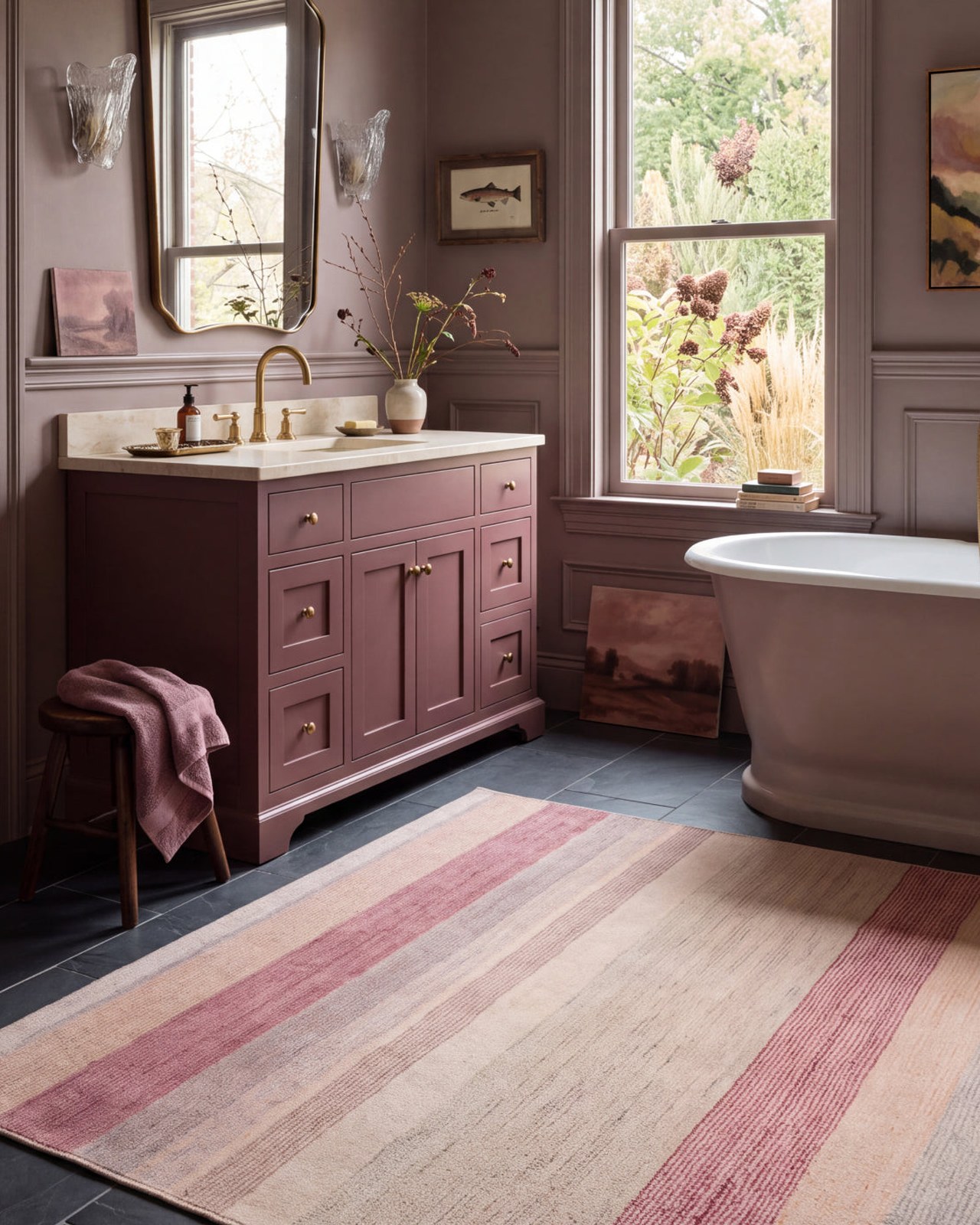
Area rugs have to make sense for the life happening around them. Gridiron Handwoven Indoor/Outdoor Rug and Samson Handwoven Indoor/Outdoor Rug are names that suggest a flexible role across everyday spaces, while Arbor Machine Printed Washable Rug and Kali Machine Printed Washable Rug put care and placement into the same decision. Malta Handwoven Wool Rug gives a wool option to consider in a quieter sitting area, and Miss Muffet Handwoven Cotton Rug brings cotton into the room’s floor layer. I like starting with the route people take through a room, then letting the pattern set a mood rather than dictate every other choice. In a kitchen or entry, a clear walking path matters as much as how a rug sits beside the furniture.
The Dash & Albert assortment spans rugs with different constructions, so I would give each room a particular job: a washable option where cleanup is part of the week, an indoor and outdoor style where a threshold needs a visual bridge, or a handwoven option where texture can do more of the talking. This guide to washable rugs is a useful companion for thinking through care routines. What I would skip is choosing a thick or delicate surface for a high traffic passage when a simpler rug would suit the way the room works. Let the floor plan lead, then repeat one tone from the rug elsewhere to make the whole space feel connected.

Macie Botanical Standard Sham
Annie Selke
$34.8

Bryant Sham, Standard
Annie Selke
$88

Lodi Matelasse Standard Sham
Annie Selke
$88

Moon Hills Linen Standard Sham
Annie Selke
$68

Wilton Ruffle Sham, Euro
Annie Selke
$88

Fira Euro Sham
Annie Selke
$78

Aria Floral Sham, King
Annie Selke
$58

Ines Linen King Sham
Annie Selke
$88
The Finishing Layers That Make a Bed Feel Personal
Pillow shams are the bridge between the duvet and the bed itself, and I like using them to introduce one new detail at a time. Macie Botanical Standard Sham gives a patterned option, while Bryant Sham, Standard and Lodi Matelasse Standard Sham are names I would set against a quieter coverlet to let the bed keep its balance. Moon Hills Linen Standard Sham and Ines Linen King Sham bring linen into the naming, while Wilton Ruffle Sham, Euro and Fira Euro Sham suggest two different ways to shape the back row. Aria Floral Sham, King can echo the floral direction of the duvet without making every layer identical. The goal is a bed that feels arranged, then easy to undo at night.
I usually place the larger Euro forms toward the back, then keep the pillows used for sleeping close at hand. A plain top layer gives a patterned sham more room; a simple sham can make a more expressive duvet easier to live with. One small color repeated at the bedside is enough to connect the bedding to the rest of the room. I would skip building a display that needs to be dismantled every evening, because a bed should work for the people who use it. Annie Selke’s history across Pine Cone Hill and Dash & Albert gives this collection a coherent home textile language, but the choices still leave space for a personal mix. Keep what invites you to settle in, and let the rest of the room stay itself.