Garnet Hill sizing is best approached through body measurements and each style's fit notes, because silhouettes vary. This guide covers the brand's regular and petite ranges, garment lengths, and how to compare trousers, tops, and dresses.

Garnet Hill Sizing: Does Garnet Hill Clothing Run Small, Big or True to Size?
Start with the chart
Garnet Hill does not run uniformly small or large; I would start with your measurements and then read each style's fit note. Garnet Hill sizing uses bust, waist, and hip measurements, with regular sizing for heights 5 feet 4 inches to 5 feet 8 inches and petite sizing for shoppers under 5 feet 4 inches. Regular runs from XS or 0 through XL or 18, while petite runs from XS or 0 through L or 14. The general chart has no tall range. Length is a separate decision: the tops guide uses labels such as cropped, high hip, knee, and mid-calf, while the bottoms guide uses short, ankle, and maxi rather than a numeric inseam table. One washable-cashmere turtleneck is described as oversized and boxy, with a low-hip length, which is useful evidence for that style, not a store-wide rule. I would measure first, then decide whether I want a closer line or room for layering. When two sizes seem plausible, compare the garment measurements and think about what you plan to wear underneath.


Pants are about rise and shape
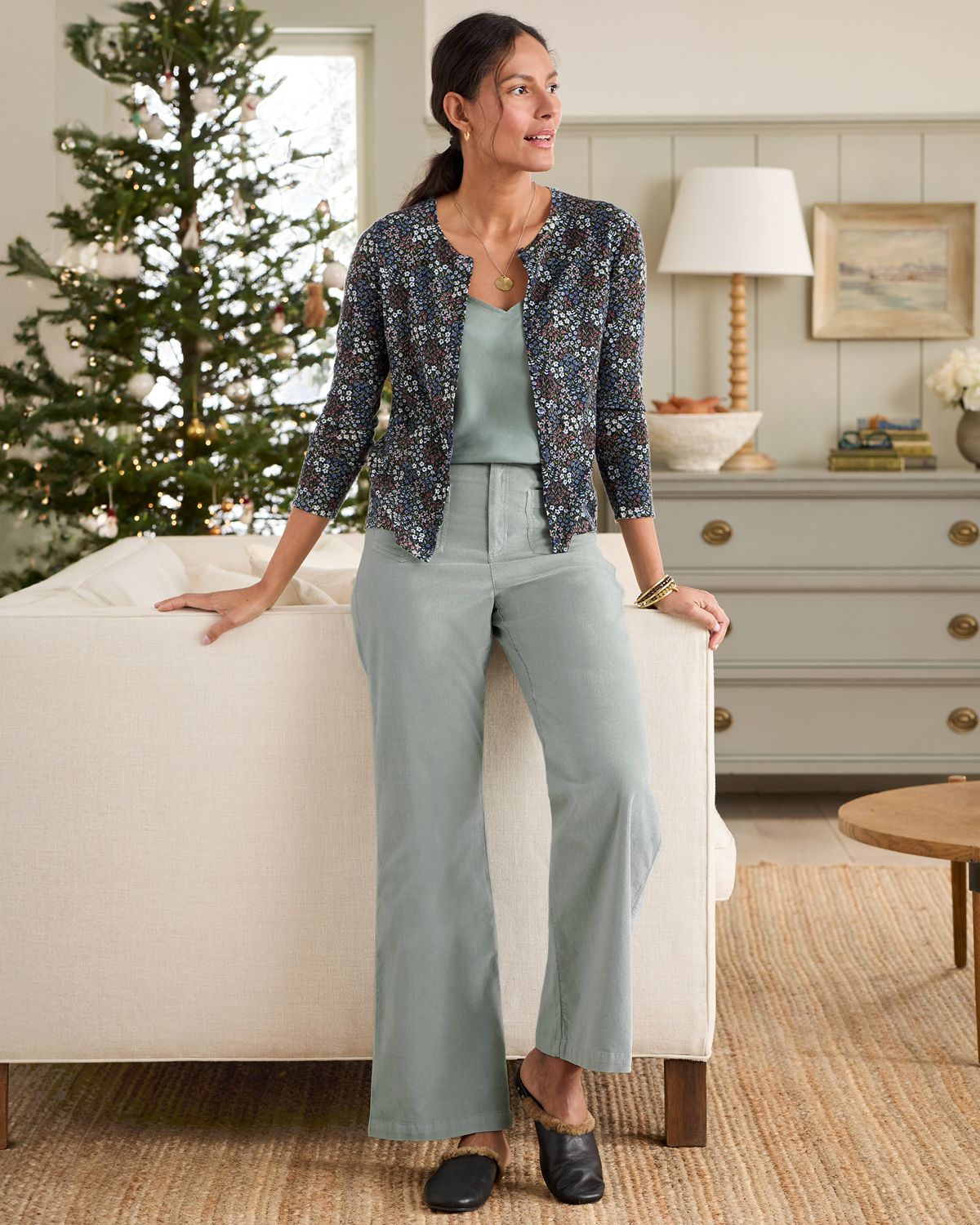
Rise and leg shape matter more than a store-wide size slogan when you are choosing pants. Veronica Flare Corduroy Pants have a gently flared leg and a touch of Lycra in organic-cotton corduroy; DL1961 Hepburn Wide-Leg High-Rise Vintage Jeans bring a higher rise and wider line. Pima Cotton Chino Trousers are full length and straight, with a hint of stretch, while Comfort Trousers pair a wide elastic waist with a tapered leg. Those are four distinct ideas, so I would compare the one you already know you wear with its closest match. Garnet Hill's bottoms guide uses named lengths instead of one inseam chart. If hem placement matters, check the individual measurements and try to picture the pants with your usual shoes. I would not size up automatically in corduroy or denim. First decide whether you want the leg to skim or feel roomier, then use the fabric and fit notes to settle the size.


Read the knit and shirt notes
Knit tops and shirts are a good place to stop treating a letter size as a verdict. Sutton Vintage Knit Henley and Mavis Button-Front Knit Top suggest two different everyday moods, while Essential Three-Quarter-Sleeve Boatneck Tee and Nicole Lace-Detail Knit Top put the neckline and sleeve into the decision. The product names tell you what details to compare, but they do not establish a universal fit rule. I would look at shoulder placement, sleeve length, and how much ease you want through the body. For a tee under a cardigan, a closer shape may feel easier; for a button-front or lace-detail top, decide how you want it to sit when worn alone. Use the individual measurements and fit language, not an assumption that every knit behaves alike. If you are between sizes, think about the layer you plan to wear with it and whether you prefer a neat line or extra room. That is more useful than asking whether Garnet Hill tops run small as a category.


Dress proportions matter
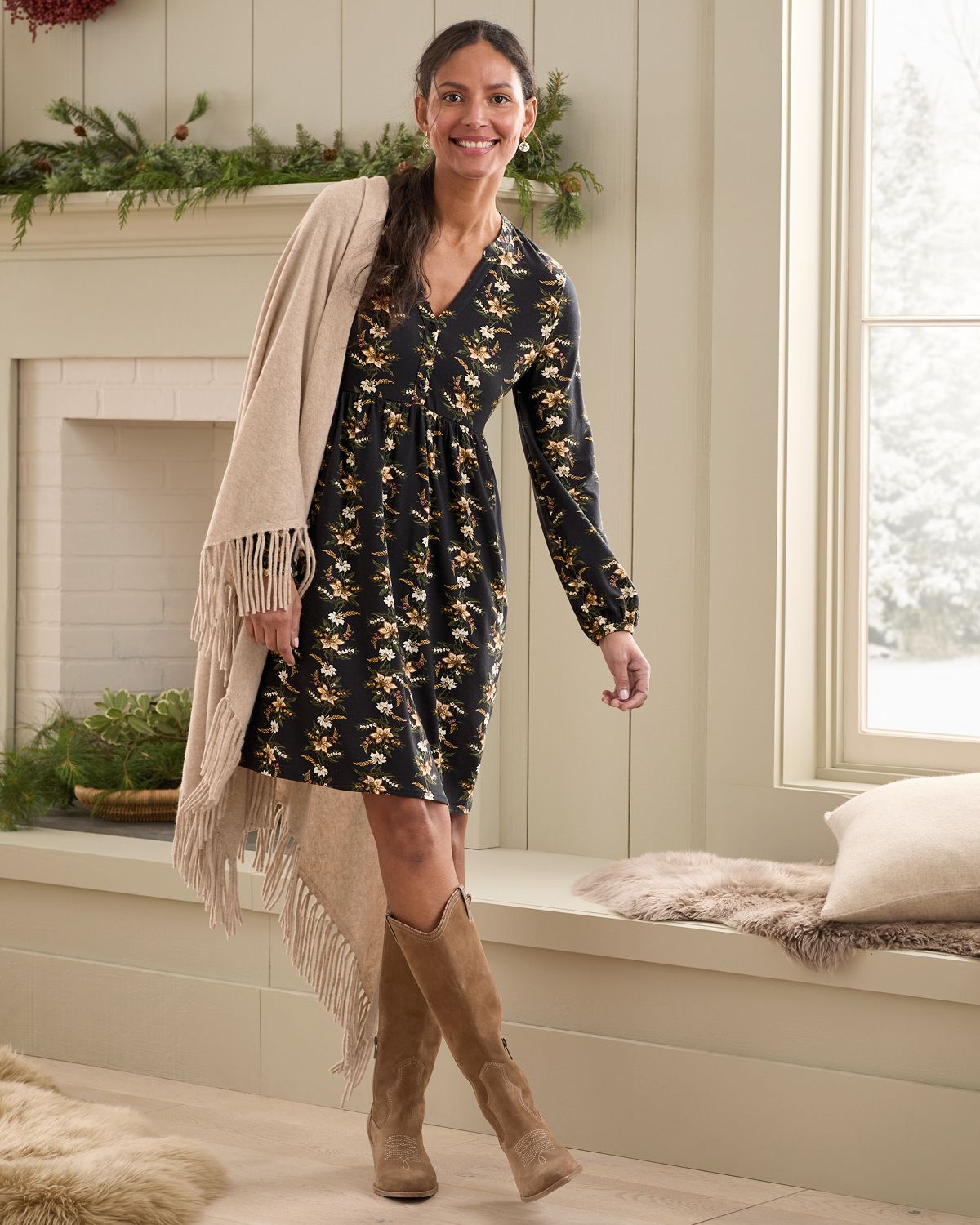
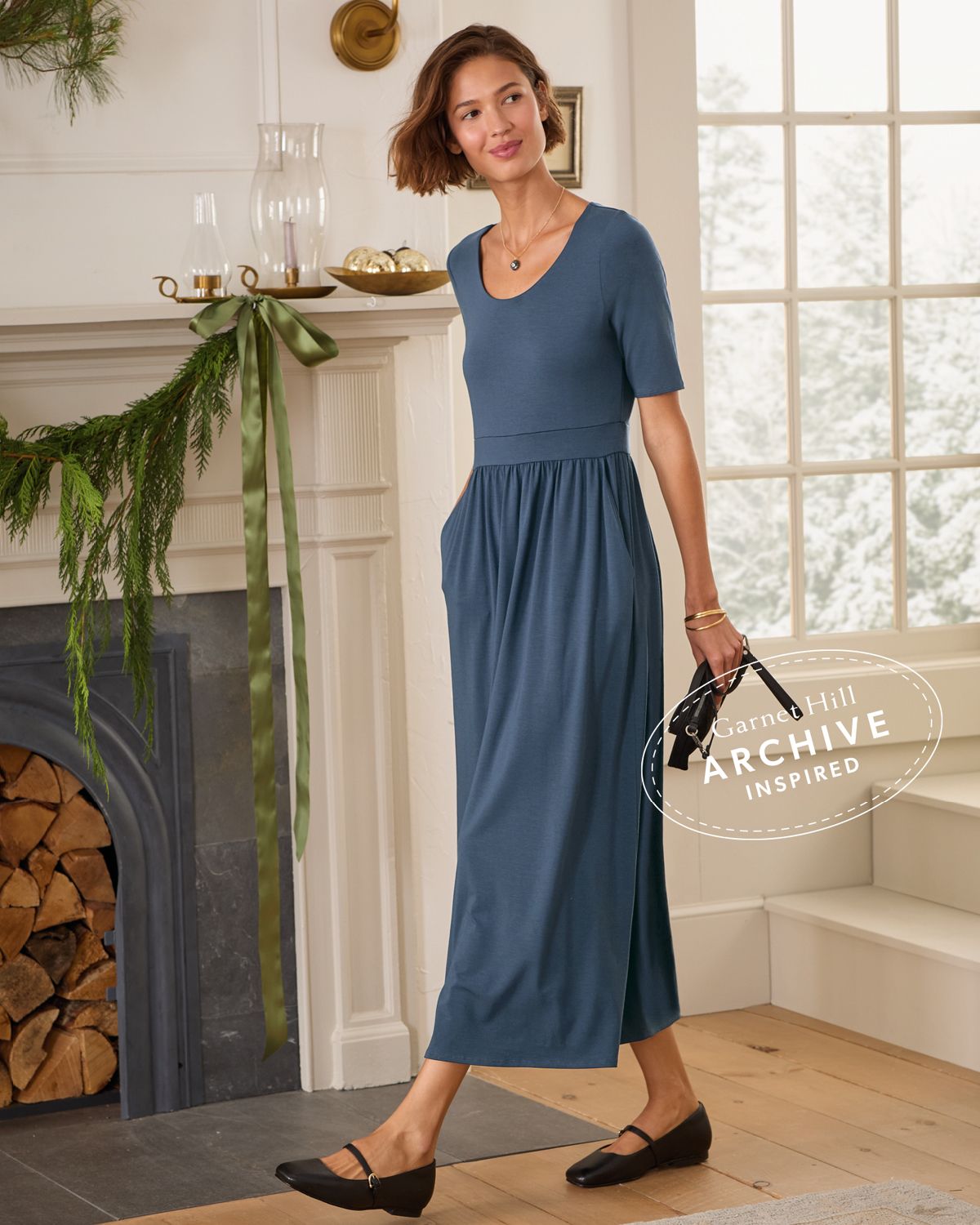
Dresses make clear that proportions involve more than a size label. Amira Embroidered Cotton Midi Dress, Lena Knit Dress, Elbow-Sleeve Scoop-Neck Knit Maxi Dress, and Ingrid Mixed-Media Knit Dress each signal a different length or surface in the name. Lena is described as a trapeze silhouette with seams and gathers, plus a hint of stretch for an easy fit. I would compare that shape with the defined line you want from a midi or the longer sweep of a maxi. Garnet Hill's length guides give reference terms such as knee, calf, and maxi, but your height and shoes still affect where a hem lands. Petite shoppers can begin with the petite chart, then compare the dress's actual length rather than going down a size to solve a proportion question. My practical order is measurements, silhouette, garment length, then size. Choose the dress whose shape suits your week, not the one that merely looks familiar on a hanger.